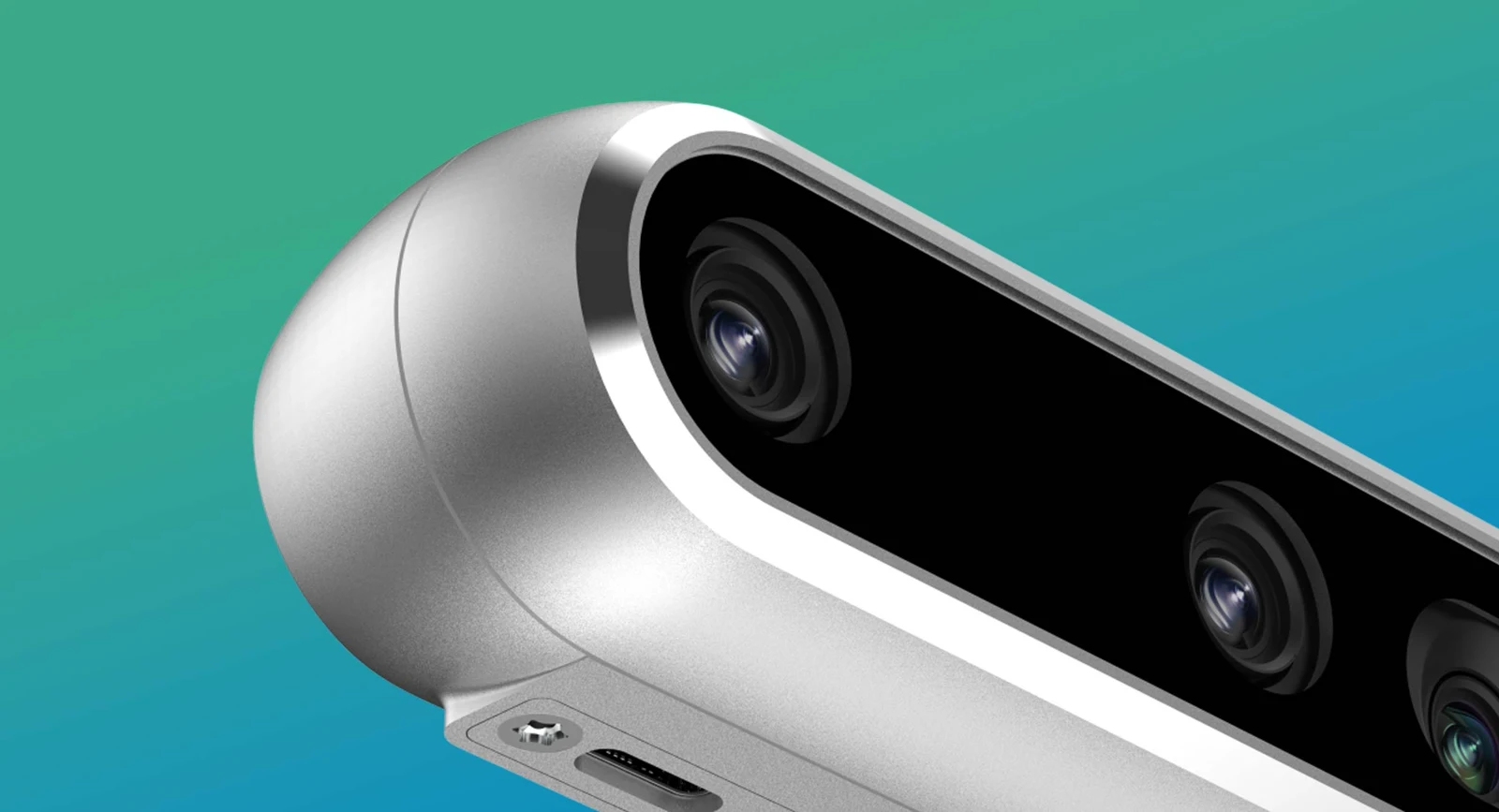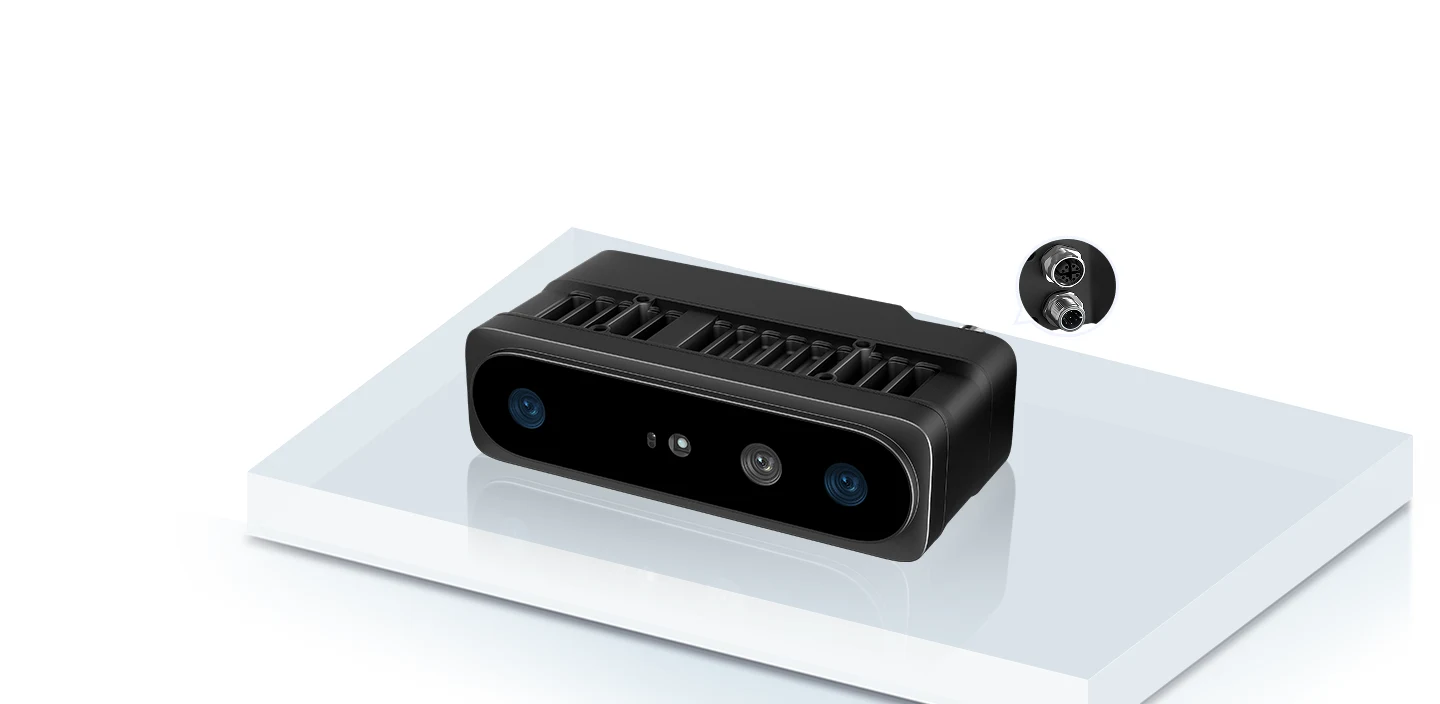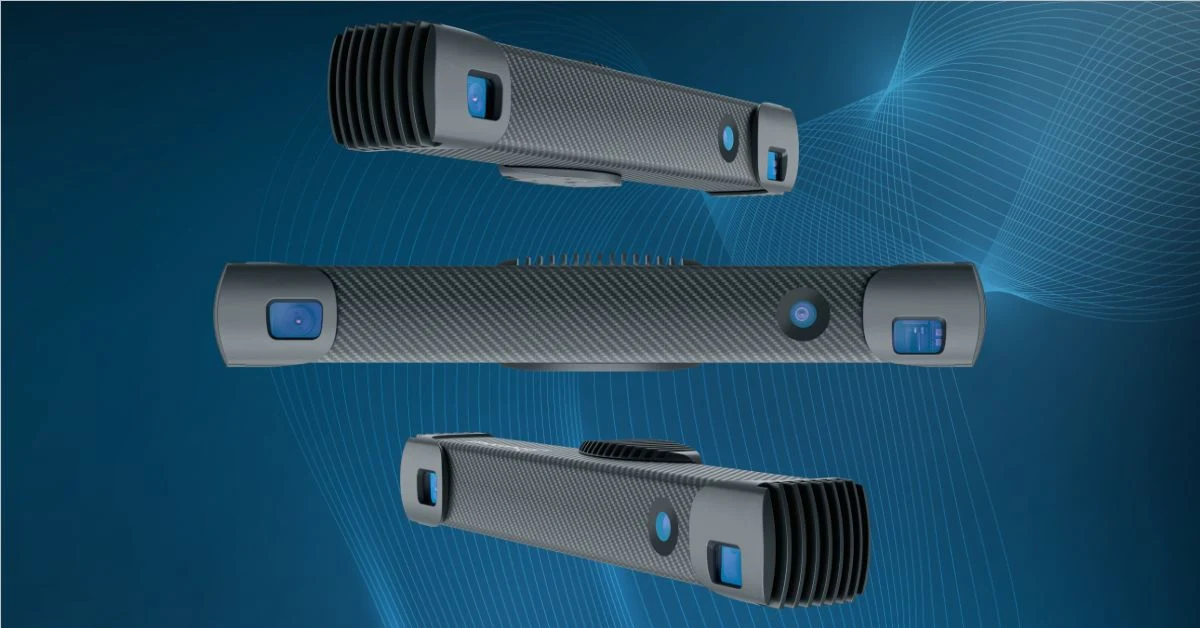
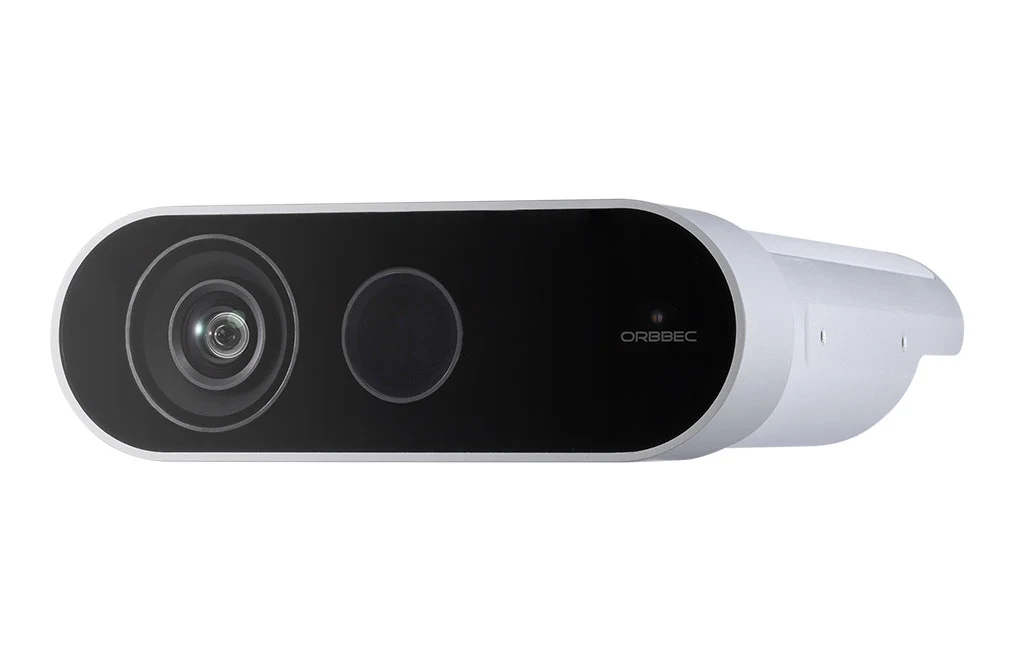
A camera above a cargo station has a different assignment from one on a living-room entertainment device. It must turn physical space into measurements another system can use. The industrial setting may be less memorable, but it can give a technology a durable purpose. Orbbec’s Femto Mega offers a way to examine that transition, and to separate the life of a sensing approach from the life of a famous product family.
This is an archive analysis of a 2023 launch, with later context checked for November 2026. Orbbec announced Femto Mega at CES on January 4, 2023, describing a partnership with Microsoft. The Robot Report covered it on January 5 in a report preserved as a company-hosted PDF. Both documents describe Microsoft time-of-flight depth technology and onboard NVIDIA Jetson Nano processing. Their agreement verifies the reported configuration, although trade coverage repeating a launch should not be mistaken for an independent performance trial.
The launch documents specified a depth field of view of 120 degrees and a working range from 0.25 to 5.5 meters, alongside a 4K RGB camera. They also described Ethernet and USB connectivity. Those are launch specifications, not measurements made by this magazine. The combination makes the underlying proposition clear: package depth acquisition and processing close together, then deliver information that a larger application can consume. It is a component architecture, not a complete autonomous robot.
Jon Yee’s launch comments connected the camera to depth technology used in HoloLens and Azure Kinect DevKit. Microsoft’s own lifecycle record later placed Azure Kinect SDK retirement on August 17, 2024. That date belongs to the SDK’s support lifecycle. It should not be used to imply that all partner hardware stopped working or that every related camera shared the same support terms. Technology transfer and product support have overlapping histories, but they are different obligations.
“This camera is a result of a close collaboration between our teams”
A later application appears in Orbbec’s April 2026 MODEX account. The company reported that Cargo Spectre was introducing Roll-Thru, a dynamic dimensioning solution powered by Femto Mega. That is a manufacturer’s account of a partner application, not an independently verified installation count or throughput result. Still, it supplies a concrete connection between the launch architecture and an industrial use. The camera’s story did not end with a CES specification sheet.
For robotics, the lesson is not that every sensor must become more elaborate. It is that the useful boundary of a component can shift. Processing depth near the camera can change what a developer receives and what the rest of the system must do. The important question becomes whether the resulting interface makes the application easier to build, inspect and maintain. A compact package may simplify one integration while introducing different constraints around software and updates.
Consider a team replacing an aging depth device in an existing application. Similar sensing technology would be a starting point, not proof of interchangeability. The team should compare coordinate systems, calibration, timestamps, mounting, software behavior and support commitments. It should run the workflow end to end with recorded exceptions. None of those checks requires dismissing the benefits of a partner ecosystem. They are how an engineering team establishes whether those benefits survive contact with its own equipment.
The same reasoning applies to robots that need to act on measurements. A point cloud does not select a grasp or determine a safe path by itself. The rest of the machine needs observations it can interpret at the appropriate time, with a dependable way to recognize trouble. Bringing compute into the camera changes the distribution of work, but does not remove the need to validate the complete perception-to-action chain. That is an integration responsibility rather than a headline feature.
Femto Mega is therefore worth revisiting as infrastructure history. Its launch connected Microsoft depth technology, NVIDIA processing and Orbbec’s camera platform; later reporting placed it in a cargo application. The broader robotics race will depend on many such translations. A successful sensor is not simply remembered for its debut. It keeps producing useful observations in systems that someone can service, improve and trust with a physical task long after the demonstration has ended.