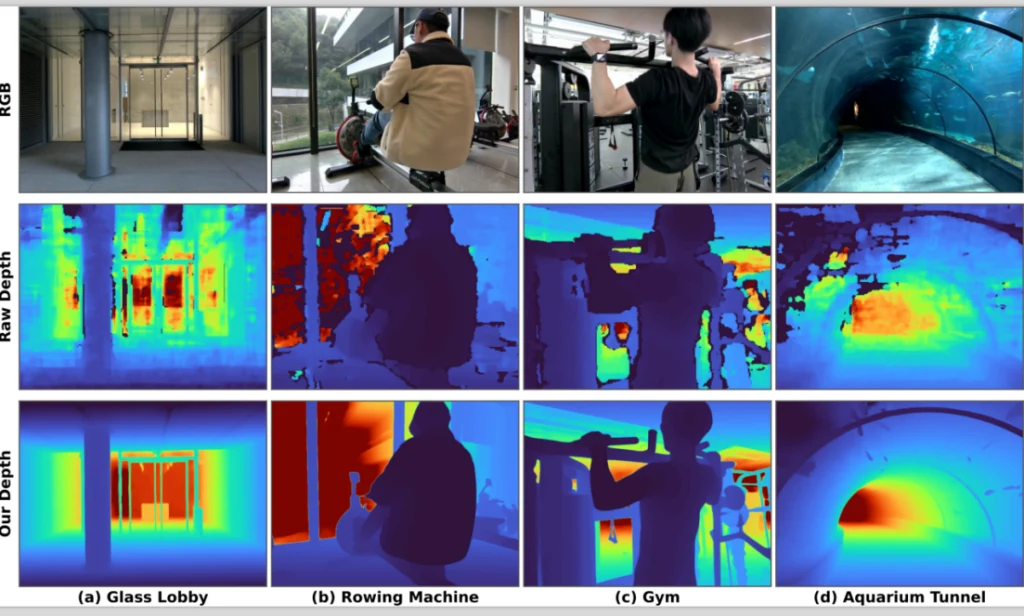
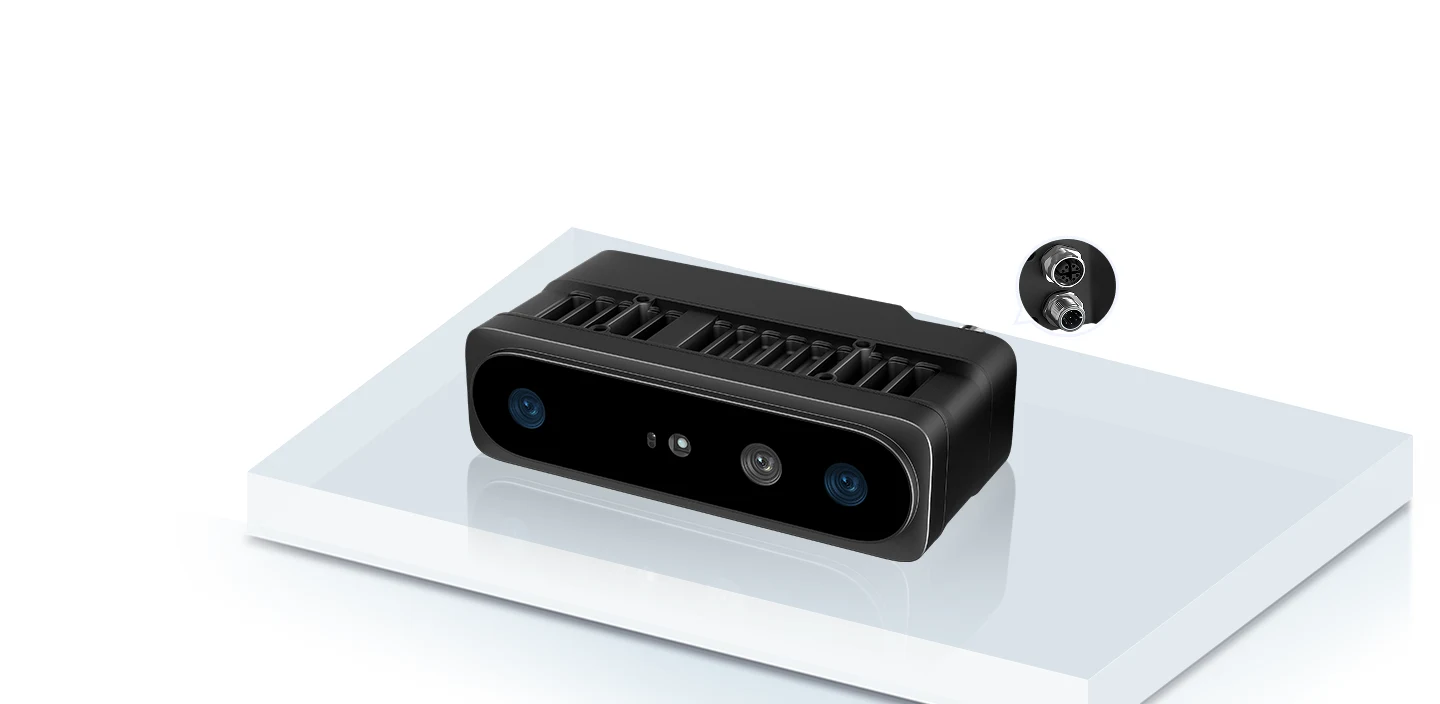
The opening in a pallet is an unglamorous target. It is also a demanding one. A warehouse vehicle needs an interpretation precise enough to guide its approach, with the boundary between solid material and empty space in the right place. A beautiful color image is insufficient if the depth map blurs the feature the machine must use. This is where a camera announcement becomes a story about whether automation can finish a physical job.
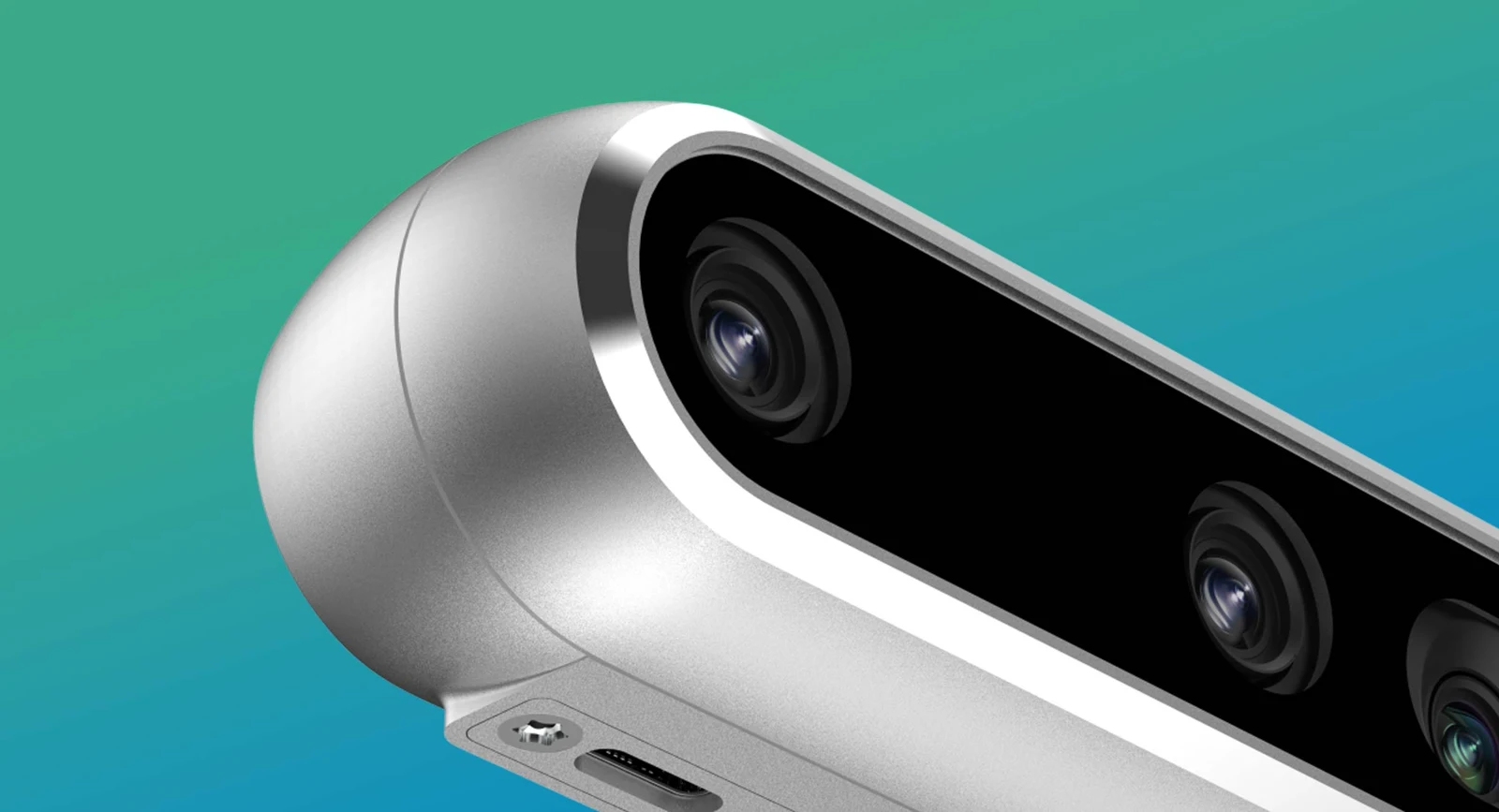
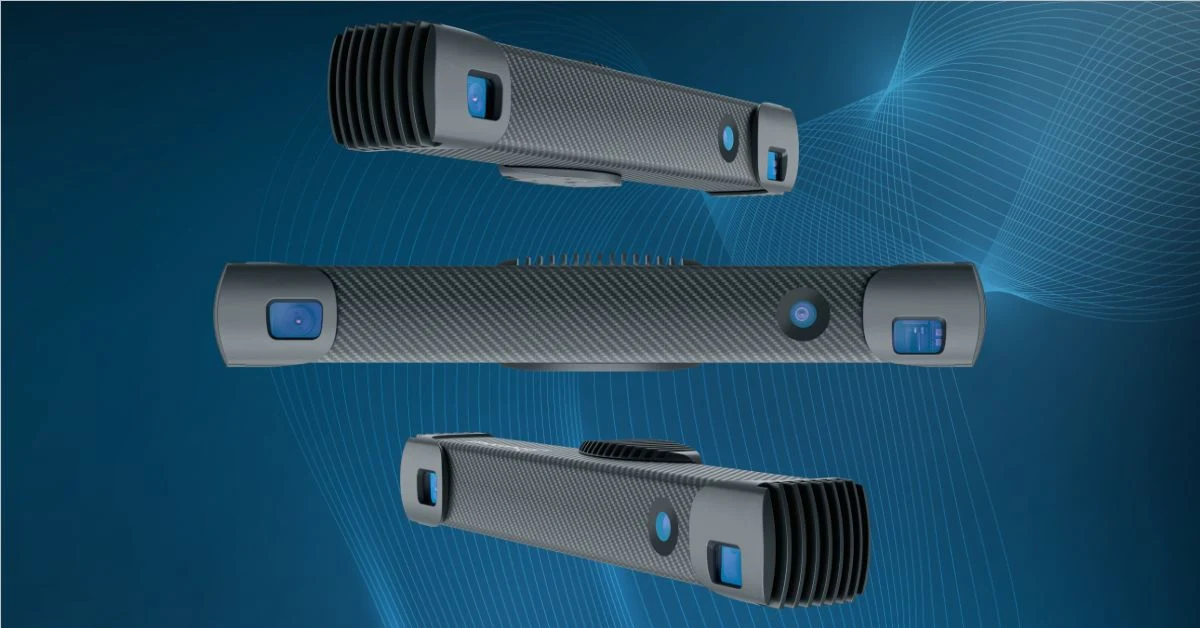
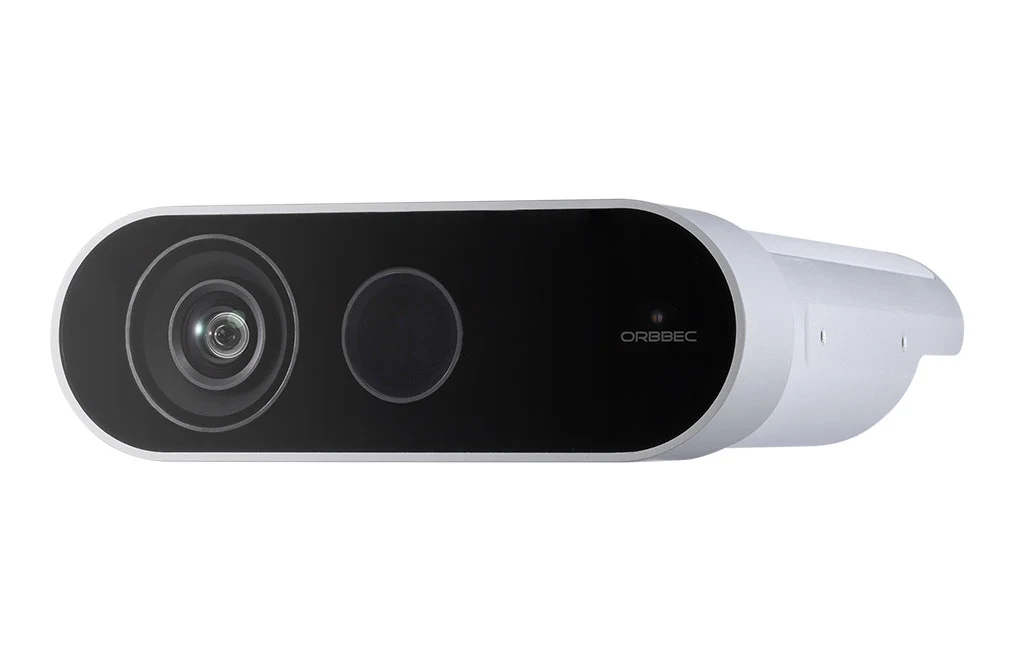
Orbbec introduced the Gemini 435Le at Automate in Detroit on May 12, 2025. Its launch announcement emphasized contour reconstruction, configurable depth processing and applications including forklifts. The story reached The Robot Report, whose coverage Orbbec linked publicly. The original article could not be retrieved for this report, so the specifications and launch details here come directly from Orbbec, rather than from an unseen trade article.
The camera’s product documentation describes Gigabit Ethernet with Power over Ethernet and an IP67 enclosure. Its published FAQ gives depth accuracy of plus or minus 1% at two meters. These are manufacturer specifications, not findings from an independent test. The same documentation qualifies long-distance depth readings by target reflectivity and notes that actual accuracy changes with distance and the object being measured. Range is therefore a conditional capability, not a blanket promise of equally useful measurements everywhere.
That qualification changes how a buyer should read the product. Seeing something far away and measuring the geometry needed for a precise approach are different requirements. The former may help a planner prepare. The latter determines whether a vehicle can complete the maneuver it has been assigned. A responsible integration should specify which decision each distance measurement supports, instead of turning the largest advertised range into a claim about the whole robot.
“the market’s need for highly reliable visual perception technology is also increasing”
Orbbec’s presets make this distinction explicit. The May launch described an AMR Perception Mode that favors complete, stable depth for navigation, and a Dimensioning Mode directed toward edge measurement. This suggests a more useful way to think about camera performance: the output is shaped for a task. A robot that moves through an aisle and then measures a load may need to change how it uses the same sensor, rather than treating every point cloud as interchangeable.
By April 2026, Orbbec was describing a Gemini 435Le forklift automation demonstration at MODEX. Its account highlighted pallet recognition and ground-level obstacles. That establishes a demonstrated application in the company’s reporting, but supplies neither an independently measured fleet safety result nor a documented return on investment. The distinction is particularly important around vehicles. A depth camera contributes information to a system; its presence does not establish that the complete machine is safe for a particular workplace.
A revealing customer trial would make the scene awkward. Try an imperfect pallet, an unfamiliar load and an approach that partially hides the target. Include the lighting transitions the vehicle would actually encounter. Then evaluate the decisions downstream: when does it slow, stop, request another observation or ask for assistance? Those are proposed acceptance questions. They are not reported outcomes for the 435Le. Their purpose is to connect an optical specification to the work an operator needs done.
Cabling and service access deserve a place in that trial as well. A camera is part of a vehicle that must be installed and maintained, not a laboratory instrument floating outside the machine. Ask whether the mounting position survives the operating environment, whether a replacement can be commissioned predictably and whether recorded failures contain enough information to diagnose. These details can determine how much of a camera’s theoretical capability survives a deployment.
The larger point is easy to miss amid humanoid demonstrations. Some of robotics’ decisive improvements may arrive as clearer boundaries around ordinary objects. A forklift does not need to describe a pallet elegantly. It needs dependable geometry at the moment its controller commits to motion. Orbbec’s proposition is that industrial depth vision can become more adaptable to that demand. The convincing evidence will be repeatable approaches to difficult loads, with the exceptions counted too.